

Game on: Fueling Motivation with Gamified Learning & Training

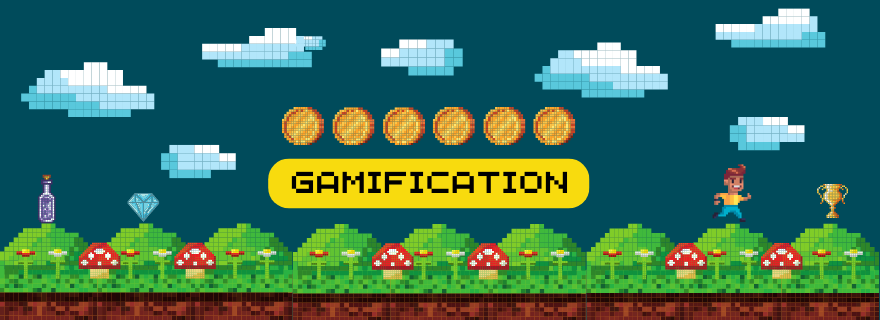
Learning can be a chore, but what if it felt more like a game? Gamification, the use of game elements in non-game contexts, is transforming the way we approach education and training. By tapping into our natural human desire for challenge, reward, and progress, gamification can significantly boost motivation and make learning more engaging.
The Science of Fun: The Psychology Behind Motivation
Games are so effective because they leverage powerful psychological principles. When we complete a task or overcome a challenge in a game, our brains release dopamine, a neurotransmitter associated with pleasure and reward. This positive reinforcement keeps us engaged and motivated to keep playing (and learning!). Gamification incorporates elements like points, badges, and leaderboards to create a similar reward system, making learning feel more enjoyable and fostering a desire to keep progressing.
When we complete a task or overcome a challenge in a game, our brains release dopamine, a neurotransmitter associated with pleasure and reward.
From ABCs to XYZs: Gamification in Early Learning and Primary Stages
Gamification shines in early learning environments. Imagine learning your alphabet through an interactive app where collecting letters unlocks new levels or earning points allows you to customize your virtual avatar. Educational games can make memorization and basic skill development more fun and engaging for young children, setting a positive foundation for future learning. Simple reward systems can create a sense of accomplishment. Earning points for completing puzzles or activities can be visualized through a progress bar or a collection of colorful stars. As children progress, they might unlock badges or stickers that showcase their achievements, motivating them to keep learning. Gamification doesn’t have to be digital. In a classroom setting, learning basic math can be transformed into a treasure hunt where children solve addition or subtraction problems to find hidden clues that lead them to a “prize” (a sticker, a short story time, etc.). Learning shapes can involve sorting colorful beanbags into different shaped containers, earning points for each correct placement.
Earning points for completing puzzles or activities can be visualized through a progress bar or a collection of colorful stars.
Language Learning Without the Textbooks: Gamification for Adults
Language learning can be daunting for adults. Gamification apps can transform this experience. Imagine practicing your Spanish by competing with friends in a virtual race where answering questions correctly moves you forward. Earning points for completing lessons or unlocking new vocabulary through interactive games can make language learning feel less like a chore and more like a fun challenge. Adults often thrive in collaborative environments. Gamification can incorporate social elements that encourage interaction and knowledge sharing. Imagine a project management training program where teams compete in a simulated project, earning points for completing tasks efficiently and collaboratively. Leaderboards and team-based challenges foster a sense of community and healthy competition, keeping adult learners motivated and engaged.
Leaderboards and team-based challenges foster a sense of community and healthy competition, keeping adult learners motivated and engaged.
Level Up Your Workplace: Gamification for Corporate Training
Gamification isn’t just for kids! Training programs for corporate staff can benefit greatly from gamified elements. Imagine school teachers learning new classroom management techniques through a role-playing simulation where points are awarded for successfully resolving student conflicts. Supervisors could be trained on new performance review protocols through a branching narrative scenario where their choices determine the outcome and unlock new skills. Gamification can make training more engaging, improve knowledge retention, and even encourage friendly competition among colleagues.
Tech to the Rescue: Gamification Using Technology
Technology plays a crucial role in modern gamification. Mobile apps, learning management systems, and even virtual reality can be used to create immersive and interactive learning experiences. These platforms allow for easy tracking of progress, real-time feedback, and the ability to connect with other learners for a more social and motivating experience. LMS platforms can be transformed into gamified learning hubs. Imagine a corporate training program hosted on an LMS that incorporates points, badges, and leaderboards for completing training modules and participating in online discussions. The LMS can track individual and team progress, allowing learners to visualize their achievements and fostering a sense of friendly competition. Additionally, LMS can integrate with gamified simulations and scenarios, providing a more immersive and interactive learning experience.
Imagine a corporate training program hosted on an LMS that incorporates points, badges, and leaderboards for completing training modules and participating in online discussions. The LMS can track individual and team progress, allowing learners to visualize their achievements and fostering a sense of friendly competition.
Gamification isn’t a magic bullet, but it’s a powerful tool that can make learning more enjoyable, engaging, and effective. So next time you’re faced with a training manual or a new language course, consider incorporating some game elements. You might just surprise yourself with how much fun you can have while learning!


Responses